Why does AI use so much water, and why do the numbers disagree?
AI needs water to cool data centres and to generate power. Why per-prompt estimates run from five drops to a bottle, and what each figure counts.
The short version
- What’s happening: AI chips turn electricity into heat, and many data centres evaporate water to remove it. Power stations use water too, so AI draws on two separate sources.
- Why now: Published per-prompt estimates run from 0.26 mL to 45 mL for ordinary text, and a figure of about a bottle per email is still repeated. The estimate's author is reported to have called it outdated in May 2026.
- Should you care: The figures measure different things, so comparing them directly gives the wrong answer. Knowing what each one counts lets you judge the next claim you see.
AI uses water because its chips turn electricity into heat, and evaporating water removes that heat with relatively little energy. The power stations supplying the electricity consume water as well, and across US data centres that second share is the larger one.
Per-prompt estimates of how much water AI uses run from about five drops to a whole bottle. Those figures aren’t measuring the same thing, and this piece lines them up.
Does this affect you? Twenty text prompts a day comes to about 5 mL on Google’s figure for Gemini, or about 300 mL on the 15 mL estimate attributed to researcher Shaolei Ren. That’s our arithmetic, and it assumes every prompt is typical.
If you live near a large data centre, look up its cooling type and water source, because per-prompt numbers won’t tell you much.
Why does AI use so much water in the first place?
Nearly all the electricity a server draws ends up as heat, and that heat has to leave the building. Inside the server hall, it’s often carried away by air or liquid. That stage doesn’t use up water, even when liquid sits right against the chip.
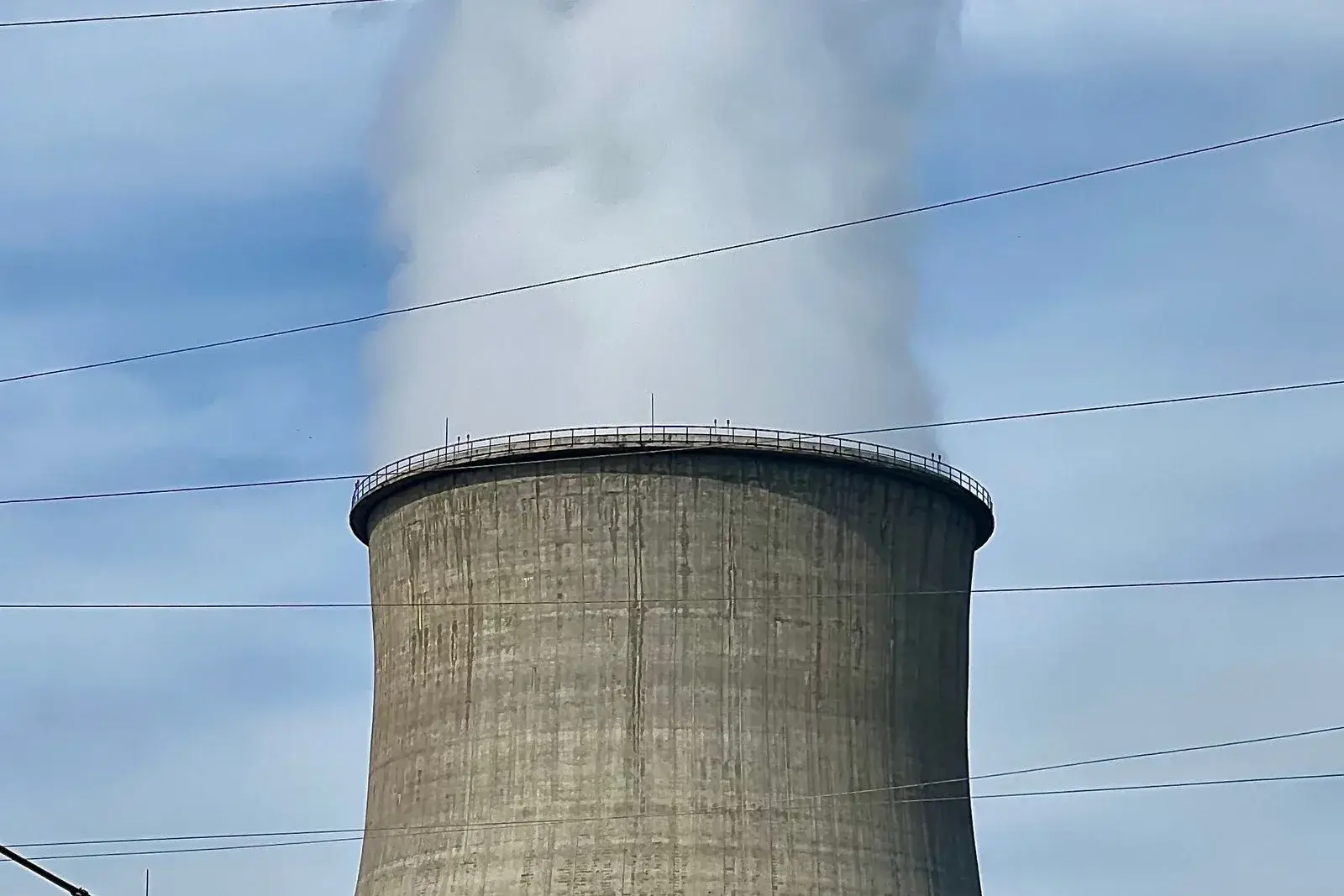
The water goes at the next stage, when the building sheds heat to the outdoors. In a cooling tower, part of the water evaporates and takes the heat with it. The rest can only be reused a few times before minerals build up, so clean water is added constantly.
Operators do have alternatives, and each one has a cost:
- Air-cooled systems use no water, but Berkeley Lab’s 2024 report says they generally need more energy than evaporation-based ones. More energy can mean more water consumed at the power station.
- Closed-loop liquid systems don’t lose water in normal running, according to Engadget. The liquid still has to be re-cooled by other equipment, and leaks are a risk.
How it spread
- 6 Apr 2023Li, Yang, Islam and Ren post a paper estimating that GPT-3 consumes 500 ml of water for roughly 10 to 50 medium-length responses.
- Sep 2024The Washington Post publishes a bottle-per-email figure after consulting Shaolei Ren, and other outlets repeat it.
- Jun 2025Sam Altman writes that an average ChatGPT query uses about 0.000085 gallons of water.
- 22 Jul 2025Mistral publishes a lifecycle study giving 45 mL for a 400-token Le Chat response.
- 22 Aug 2025Google publishes 0.26 mL for its median Gemini Apps text prompt.
- 27 May 2026Writer Andy Masley reports that Ren agreed by email that the bottle figure is outdated, and now estimates about 15 mL.
AI’s water comes from two taps
Researchers split the water into on-site and off-site. On-site is the cooling water at the data centre. Off-site is the water consumed generating its electricity, because many power stations need cooling and hydroelectric reservoirs lose water to evaporation.
On US figures, the second tap is the bigger one. Berkeley Lab estimated that all US data centres, AI or not, consumed 66 billion litres directly in 2023 and nearly 800 billion litres indirectly. That’s roughly 12 to 1 on our division, and the indirect figure assumes each site’s local grid mix, because the authors didn’t have data on individual power deals.
There’s a third source too: making the chips and servers. The Li and Jegham per-query figures below leave it out.
How much water does AI use per prompt?
As of November 2026, these are the main published estimates. None is a meter reading of the water behind one prompt. They’re calculations, and where a method is shown, the usual step is to multiply energy by a water rate.
| Who and when | Figure | Per what | How it was produced | What it counts |
|---|---|---|---|---|
| Li, Yang, Islam and Ren, first posted April 2023, revised March 2025 | 16.9 mL US average; 10 to 50 mL across places and times | One medium GPT-3 request: up to 800 words in, 150 to 300 out | Modelled from an assumed 4 Wh of server energy and Microsoft’s published efficiency data | On-site 2.2 mL plus off-site 14.7 mL |
| Ren, consulted by The Washington Post, September 2024 | About a full bottle | One 100-word ChatGPT email | Researcher’s estimate, reported in the press | We couldn’t confirm the exact split |
| Sam Altman, OpenAI, June 2025 | 0.000085 gallons, about 0.32 mL on our conversion | Average ChatGPT query | Self-reported, with no method on the page | Not stated |
| Mistral, with Carbone 4 and ADEME, July 2025 | 45 mL | One 400-token Le Chat response | Lifecycle study, peer-reviewed by two consultancies, which Mistral calls a first approximation | Marginal inference impact, excluding users’ devices; the page gives no on-site and off-site split |
| Google, August 2025, using May 2025 data | 0.26 mL | Median Gemini Apps text prompt | Self-reported: production energy data, excluding facility overhead, multiplied by Google’s on-site rate of 1.15 L/kWh for data centres supporting its AI models | Defined as data-centre cooling water; the formula has no power-station term |
| Jegham and colleagues, May 2025, revised November 2025 | Under 4 mL to over 200 mL | One long prompt: about 7,000 words in, 1,000 out, varying by model and host | Modelled from public performance data, hardware specifications and published efficiency rates | On-site plus off-site; excludes manufacturing |
| Ren, reported by Andy Masley, May 2026 | About 15 mL; about 5 mL | Average chatbot prompt | Second-hand account of an email; we couldn’t find a published method | 15 mL includes off-site water; Masley’s summary adds about 5 mL for the data centre alone, without crediting that figure to Ren separately |
Why the numbers disagree so much
Four differences in method explain much of the gap. None of them requires anyone to be wrong.
1. Which taps are counted
Compare Google’s 0.26 mL with Ren’s reported 15 mL and the gap is about 58 times. On the same boundary it narrows to about 19 times on-site, or about 11 times using our illustration below.
| Estimate | On-site only | On-site plus power stations |
|---|---|---|
| Li and colleagues, GPT-3, US average | 2.2 mL | 16.9 mL |
| Ren’s 15 mL with Masley’s 5 mL on-site split, average chatbot prompt, 2026 | About 5 mL | About 15 mL |
| Google, median Gemini prompt, May 2025 | 0.26 mL | Not published; about 1.3 mL on our illustration |
That 1.3 mL is ours, not Google’s. We multiplied its 0.24 Wh by Berkeley Lab’s US average of 4.52 L/kWh for indirect water, then added the 0.26 mL. It applies a US average to a global fleet and ignores how Google buys its power, so it only shows the scale of the boundary effect.
Each boundary answers a fair question. On-site water tells you what a facility takes from its local supply, while adding power stations shows the cost across the system.
2. How much energy is assumed
Energy per prompt is a key input wherever a method is shown, and that input is where the widest gap sits. Li and colleagues assumed 4 Wh of server energy for a GPT-3 request. Google reports 0.24 Wh for its median prompt in May 2025, and Altman gives 0.34 Wh.
Age matters here. Google says energy per median prompt fell 33 times between May 2024 and May 2025, in a comparison its footnote says hasn’t been independently verified. Li’s team called its own assumption conservative, and said newer models could need more per request while efficiency work could bring water per request down.
3. What counts as “one prompt”
The table’s units include a median prompt, an average query, a 400-token response, a medium request and a 100-word email. Those aren’t interchangeable.
Google’s paper uses the median because a small share of heavy prompts skews the mean.
4. Where and when it runs
The same work can use very different amounts of water depending on site and season. Li’s paper gives a range of roughly 1 L/kWh for Google’s global annual average to 9 L/kWh for one large commercial site in an Arizona summer.
Did AI ever use a bottle of water per prompt?
The bottle has two sources, and they use different units. The 2023 paper said 500 ml covered roughly 10 to 50 medium GPT-3 responses, so a bottle per response isn’t what it claimed. The press figure a year later was about a bottle for a 100-word email, and it has since circulated as “per prompt”.
In May 2026, Andy Masley reported an email exchange with Ren, in which Ren rejected the older estimate as a general description:
“The 2024 estimate was time-specific, assumption-based, and should not be used to describe general AI/ChatGPT or today’s optimized systems.” Shaolei Ren, in an email quoted by Andy Masley, Substack note, 27 May 2026
This is a second-hand account, so check for a statement from Ren himself before relying on the wording. Masley also says that Ren is more concerned than he is about AI’s wider water use, so the revision doesn’t settle that larger question.
Is AI’s water use a problem? Small per prompt, maybe not per site
A prompt can be tiny while a data centre is a big local user. Both are true, because one measures a single use and the other a single place.
Totals are where the larger figures sit, and a second distinction matters there: withdrawal is water taken, consumption is water that isn’t returned. Li and colleagues project global AI at 4.2 to 6.6 billion cubic metres of withdrawal in 2027, but 0.38 to 0.60 billion cubic metres of consumption. Those are projections, and the two ranges shouldn’t be swapped.
What isn’t known is also large. Two University of Wisconsin-Milwaukee researchers wrote in September 2025 that company disclosure is voluntary and doesn’t consistently include indirect water, which makes totals hard to compare. The same litre also matters more in a dry basin than in a wet one, and a global average can’t show that.
How to read the next water figure you see
Four questions will sort almost any claim:
- Who produced it, and when? A 2023 estimate describes 2023 systems.
- What’s in the boundary? On-site only, power stations too, or manufacturing as well?
- One of what? A median prompt, an average query, or a whole email?
- Water taken or water lost? Withdrawal and consumption can differ by about eleven to one in the projection above, on our division.
If a figure can’t answer those four questions, it isn’t ready to be compared with anything.
Our take
No single per-prompt number would settle the water question. On today's published figures, a text prompt is small, and that tells you very little about what a large site means for the water supply around it. We'd keep those two questions apart.
Common questions
Why does AI use so much water and electricity?
The two are linked. Running AI chips takes electricity, nearly all of it ends up as heat, and many data centres evaporate water to remove that heat. Generating the electricity can consume water at the power station as well.
How much water does AI use per prompt?
There's no single figure. Google says 0.26 mL for a median Gemini text prompt, counting data-centre cooling. Mistral says 45 mL for a 400-token response in a lifecycle study. Shaolei Ren is reported to estimate about 15 mL for an average chatbot prompt, including off-site water.
Does AI use more water than a Google search?
We couldn't confirm a current, like-for-like water figure for a Google search, so we won't give a ratio. Any comparison would need both numbers to use the same boundary, and that's the check to make when you see one.
Does the water used by data centres disappear?
The evaporated part returns to the wider water cycle, but it leaves the local supply it was drawn from. That's why researchers separate withdrawal, the water taken, from consumption, the water that isn't returned. Google's paper says it consumes 80% of what it withdraws on average.
Do AI images and videos use more water than text?
We couldn't confirm a company-published water figure for images or video as of November 2026, so we don't quote one. For text, one benchmark found that longer prompts and heavier models use considerably more, because they take more energy.
Sources
- Google Cloud Blog: How much energy does Google's AI use? We did the math
- arXiv: Measuring the environmental impact of delivering AI at Google Scale
- arXiv: Making AI Less “Thirsty”: Uncovering and Addressing the Secret Water Footprint of AI Models
- arXiv: How Hungry is AI? Benchmarking Energy, Water, and Carbon Footprint of LLM Inference
- Sam Altman: The Gentle Singularity
- Mistral AI: Our contribution to a global environmental standard for AI
- Andy Masley on Substack: note of 27 May 2026
- Lawrence Berkeley National Laboratory: 2024 United States Data Center Energy Usage Report
- Engadget: Why do AI data centers use so many resources?
- Futurism: The Environmental Toll of a Single ChatGPT Query Is Absolutely Wild
- The Invading Sea: Data centers consume massive amounts of water – companies rarely tell the public exactly how much
Spotted a mistake? Tell us, or read our corrections policy.
Weekly briefing
The stories people are talking about and why, in one short email a week.
Related stories
Laptops and phones cost more because AI data centres are buying up huge amounts of memory. Here's how it works, and when prices might ease.
Many clippers earn a set rate per 1,000 verified views, paid from a capped campaign budget. How the money moves, why brands pay and what nobody can tell you.

A shadowban means posts quietly reach fewer people. See what Instagram, TikTok, YouTube and X say about limiting reach, and which checks you can run yourself.