Why are laptops so expensive now? And why are phones following?
Laptops and phones cost more because AI data centres are buying up huge amounts of memory. Here's how it works, and when prices might ease.
The short version
- What’s happening: Memory chips are in short supply because AI data centres are buying so many, and that has made laptops and phones more expensive to build.
- Why now: IDC reported on 8 October 2026 that PC shipments fell 20.1% in a year, and its forecasts for when the shortage ends have moved later during 2026.
- Should you care: You may pay more, or pay the same and get less memory or storage. Compare specifications as well as prices, especially on cheaper models.
Why are laptops so expensive now? Mostly because AI data centres are buying huge amounts of memory, and chipmakers have shifted supply towards them. Less is left for laptops and phones, so they cost more to build. As of November 2026, none of the forecasts we read shows a quick return to 2025 prices.
Phones are caught in the same squeeze, and the effect isn’t always visible on the price tag.
Does this affect you? Probably, if any of these fits:
- You’re shopping at the cheap end. IDC said in February 2026 that the lower end of both markets would take the worst of it, because margins there are so thin.
- You’re buying because you have to. A broken laptop can’t wait for a forecast to come true.
- You’re comparing with what you paid last time. The same budget may now buy a lower specification.
If your current device works well, you have more room to choose your moment.
Why are laptops so expensive now? Follow the memory
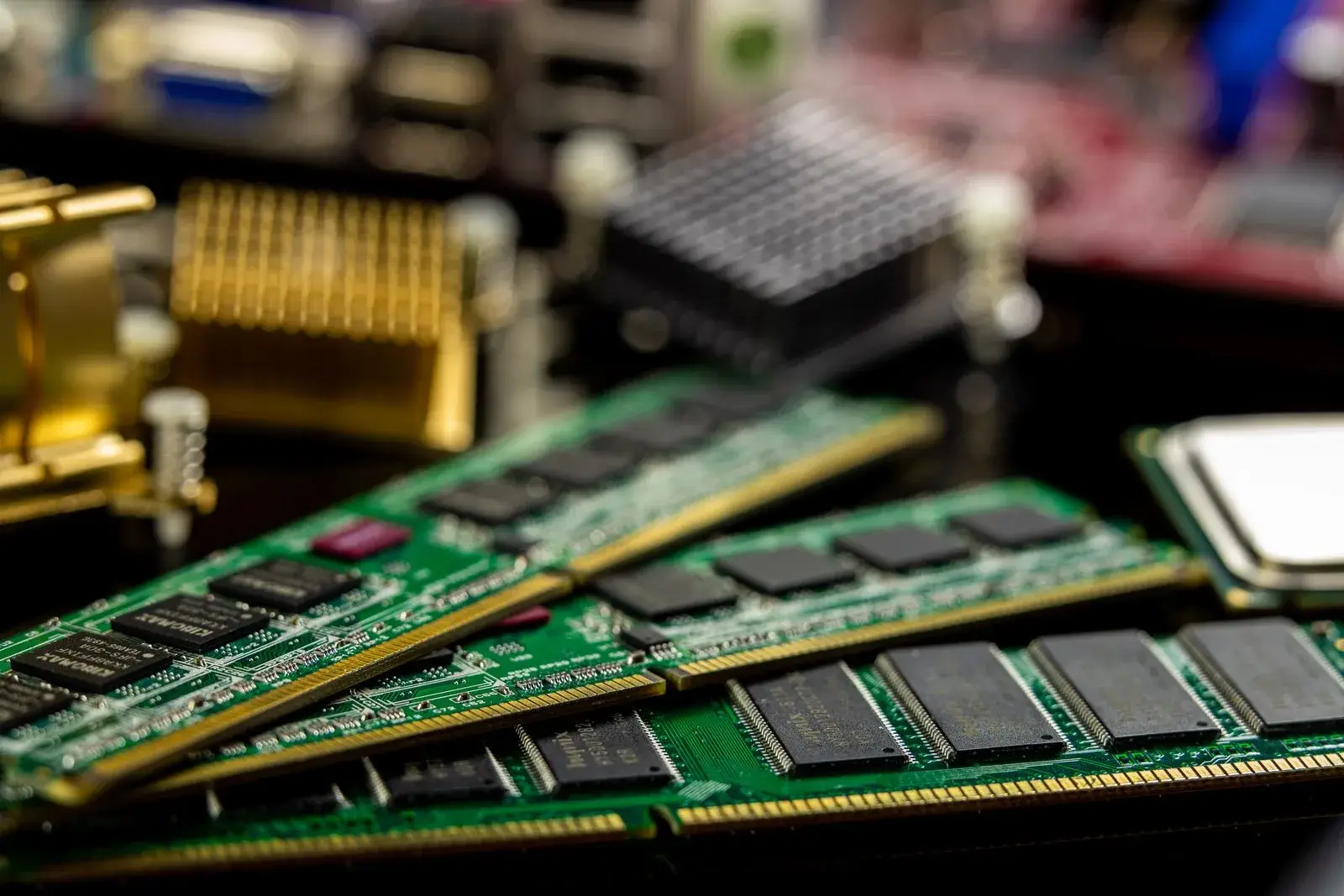
A computer has two kinds of memory that matter here. RAM is the fast working space for whatever is open right now, and storage (usually an SSD) keeps your files. Both rely on memory chips, and both have risen in price.
The chain from an AI server to your laptop runs like this:
- AI servers want vast amounts of fast memory. They use a specialised stacked type called high-bandwidth memory, or HBM.
- HBM is hungry for factory capacity. TrendForce says in its outlook of 30 July 2026 that HBM takes far more silicon per bit, so starting more wafers doesn’t raise output by the same proportion.
- Makers point production at servers. TrendForce reported in July 2026 that PC memory supply was shrinking as capacity moved across.
- Ordinary memory gets scarce and expensive. HP said memory had reached 35% of what it spends on materials for a PC, up from 15 to 18% a quarter earlier, according to The Register in February 2026.
- Device makers respond. They raise prices, trim specifications, or do both.
Micron gave the clearest example of step three in its own words. Announcing the end of its Crucial consumer brand in December 2025, it said the move was meant “to improve supply and support for our larger, strategic customers in faster-growing segments”. Crucial shipments were due to run until the end of February 2026.
Memory isn’t the only factor. IDC’s October 2026 release also lists logistics problems and softer demand among the pressures on PCs. Still, memory is the one that every major forecaster we read puts first.
How it spread
- Dec 2025Micron announces it will leave its Crucial consumer business, citing data centre demand for memory and storage.
- 26 Feb 2026IDC forecasts a 12.9% fall in smartphone shipments for 2026 and warns some devices will ship with less memory.
- 8 Jul 2026IDC reports the first fall in PC shipments after nine quarters of growth and says the shortage may not ease until early 2028.
- 30 Jul 2026Samsung tells analysts it expects supply constraints to be more severe in 2027 than in 2026.
- 26 Aug 2026IDC cuts its 2026 smartphone forecast again, to a 16.7% fall, with the average selling price at a projected $581.
- 8 Oct 2026IDC's preliminary figures show third-quarter PC shipments down 20.1% on a year earlier, to 62.7 million.
How much more are people actually paying?
Forecasts point to double-digit rises for 2026, though we couldn’t find a reliable worldwide measure of what shoppers have paid at the till. These are the main ones, with prices in US dollars:
| Who | When | Forecast for 2026 |
|---|---|---|
| Gartner | Feb 2026 | PC prices up 17% and smartphone prices up 13% on 2025 |
| IDC | 26 Feb 2026 | Average smartphone price up 14% to $523 |
| IDC | Jun 2026 (reported 3 Jun) | Average smartphone price of $550 |
| IDC | 2 Jun 2026 | Average PC selling price up 17% |
| IDC | 26 Aug 2026 | Average smartphone price up 27.6% to $581 |
Read those averages with care. An average also rises when the cheapest models stop selling, so a 27.6% rise doesn’t mean every phone costs 27.6% more. Your local price will also depend on currency, tax and the retailer.
Fewer devices are going out of the door as well. IDC’s preliminary count for the third quarter of 2026 was 62.7 million PCs, against 78.5 million a year before. It blames a large part of that on earlier buying, as vendors and resellers stocked up ahead of price rises.
Chip prices are still climbing. TrendForce’s forecast of 30 September 2026 has contract prices for conventional DRAM rising 10 to 15% in the fourth quarter, which it describes as a more moderate pace. NAND flash, the chips used for storage, is forecast to rise 15 to 20%, compared with the 10 to 15% it forecast in July for the third quarter. A contract price is what large buyers pay chipmakers, so it won’t match a shop price.
Are you also getting less for your money?
On some models, yes. A laptop can get more expensive without its price tag moving.
IDC said in February 2026: “We also expect vendors to begin shipping some new devices with less memory than consumers have grown accustomed to.” By 30 September, TrendForce was reporting that PC brands had begun reducing SSD capacity in mainstream models to bring component costs down.
The very cheapest devices face a bigger problem:
- Laptops and desktops. Gartner predicted in February 2026 that the sub-$500 entry-level PC segment would disappear by 2028. That is a prediction, and competition could soften it. IDC said in June 2026 that Apple’s MacBook Neo was keeping some low-cost notebooks alive.
- Phones. IDC reported that shipments of phones under $100 fell almost 60% in a year in the second quarter of 2026.
What to do about it: when comparing a new model with last year’s, line up RAM and storage first, then look at the price. The same applies to two models that sit at the same price in a shop.
Why can’t they just make more memory?
They are trying, but factories are slow. The Korea Herald reported in March 2026 that a chip plant takes roughly three years to build, and that converting existing lines to newer designs takes months, with output sometimes dipping along the way.
In the same report, Clark Tseng of the industry body SEMI projected global DRAM capacity growing about 4.8% a year to 2030. “They are just scaling far more slowly than the demand chasing them,” he said.
Timing is lumpy as well. TrendForce News reported on 6 October 2026 that Micron has new capacity arriving through 2027, with its next big additions not expected until the second half of 2028, citing Schulz Research.
There is also a reason for caution. Linda Sui of Smart Analytics Global warned in the Korea Herald piece that expanding too hard now could leave makers with too much supply in 2028. It’s an ordinary dilemma for an industry where a factory begun today answers demand years away.
When will prices go down?
Nobody knows, and the date keeps sliding: follow IDC’s four rows below, from mid-2027 in February to at least 2028 by August. Here is who said what, as of November 2026:
| Who | When said | What they expect |
|---|---|---|
| IDC, Nabila Popal | 26 Feb 2026 | Memory prices stabilise by mid-2027, but don’t return to earlier levels |
| Linda Sui, Smart Analytics Global | 12 Mar 2026 | A new market balance by late 2027 |
| Gartner, Shrish Pant | About Mar 2026 | Memory prices level off around early 2027, with modest easing from the second half |
| IDC, Jean Philippe Bouchard | 2 Jun 2026 | No relief from the shortage before the end of 2027 |
| IDC, Jitesh Ubrani | 8 Jul 2026 | The shortage isn’t expected to ease until early 2028 |
| Samsung, Jaejune Kim | 30 Jul 2026 | Tighter supply in 2027 than 2026, and little significant new supply through 2028 |
| TrendForce | 30 Jul 2026 | DRAM gap widens in 2027, while storage chips loosen from the second half |
| IDC | 26 Aug 2026 | Memory prices keep rising until at least 2028 |
| Acer, Jason Chen | Reported 22 Sep 2026 | PC prices fall from mid-2027, after rising 5 to 20% on average in late 2026 |
| Micron | Reported 1 Oct 2026 | Much tighter conditions in fiscal 2027 and 2028 than in 2026, with no visible date for balance |
Any single date printed today has a short shelf life.
They also aren’t all measuring the same thing. Some describe memory chips and others finished PCs. A memory maker sees its supply, while a PC maker sees what it pays and what it can sell, so some difference is natural.
“Easing” doesn’t mean “back to normal” either. IDC’s February model showed no return to 2025 pricing within its forecast period, and Ubrani repeated the point about PCs in June.
Should I buy a laptop now or wait?
We can’t tell you what a given product will cost next spring. These are general considerations, not financial advice, and they come down to how urgent your need is.
If your current device works, you aren’t forced to decide now, and waiting has one possible upside, though prices may rise further first: Acer’s Jason Chen expected average PC prices to rise 5 to 20% in late 2026. IDC’s Ubrani said in October 2026 that resellers worried about excess stock could run promotions, giving buyers some short-term relief, though he doesn’t expect prices near year-ago levels. Gartner expected consumers to keep PCs about 20% longer by the end of 2026, so you’d have company.
If you need one soon, the forecasts give little support for holding out in the hope of a big fall. The earliest date in the table above for falling PC prices is mid-2027, and that comes from one executive.
Either way, a few checks help:
- Compare RAM and storage before price, and ask whether that amount suits what you actually run.
- Find out if the memory can be upgraded later, since on many thin laptops it can’t.
- Look at used and refurbished models, which IDC expected more buyers to turn to. Check the seller’s warranty and returns terms first.
- Treat a discount as a discount only after checking the specification hasn’t shrunk with it.
This is one of the most physical effects of the AI boom. The one on your screen is AI slop, and this one is on your receipt.
Our take
Don't plan a purchase around a date. The forecasts for when this ends have kept moving later during 2026, and even the hopeful ones describe easing, not a return to 2025 prices. What you can control is simpler: how urgent your need really is, and how closely you read the specification.
Common questions
Why is RAM so expensive right now?
Demand from AI servers has outrun supply, and makers are prioritising memory for those servers. AI memory also uses more factory capacity per bit, so ordinary RAM gets squeezed. That is the view of analysts at TrendForce and IDC as of 2026.
Will RAM prices ever go down?
Probably at some point, but nobody can give a reliable date. In forecasts published during 2026, Gartner pointed to modest easing in the second half of 2027, while IDC said in August 2026 that it expected increases until at least 2028.
When will laptop prices drop?
Forecasts disagree. Acer's Jason Chen was reported in September 2026 as expecting PC prices to fall from mid-2027, while IDC said in October 2026 that prices should stay well above year-ago levels. Short-term promotions are possible, according to IDC.
Will phones cost more in 2027?
We found no solid percentage forecast for phone prices in 2027. IDC's Francisco Jeronimo said in August 2026 that average selling prices “will keep rising well into 2027”, but an average says nothing certain about any particular model.
Should I buy a laptop now or wait?
As a general point, not personal advice: if your current laptop works, you have time to watch for promotions, though prices may rise further in the meantime. If you need one now, the forecasts give little reason to expect a big fall soon, so compare memory and storage carefully.
Sources
- IDC: Q2 2026 PC shipments press release, 8 July 2026
- IDC: Q3 2026 PC shipments press release, 8 October 2026
- IDC: How the memory crisis is reshaping the PC and smartphone outlook, 26 February 2026
- IDC: Smartphone forecast press release, 26 February 2026
- IDC: PC market enters volatile territory as memory shortage persists through 2027, 2 June 2026
- IDC: Smartphone shipments set for record 16.7% drop in 2026, 26 August 2026
- IT Brief UK: IDC forecasts record smartphone shipment slump in 2026, 3 June 2026
- I-Connect007: Gartner release on memory costs, PC and smartphone shipments, February 2026
- CRN Australia: Gartner on memory prices through to 2027
- BuySellRam: When will the memory shortage end? Used only to date the CRN interview
- StorageNewsletter: Micron announces exit from Crucial consumer business, 5 December 2025
- Blocks & Files: Memory gold rush bonanza makes billions for Micron, 1 October 2026
- TrendForce via I-Connect007: 3Q26 memory price forecast, 3 July 2026
- TrendForce: Diverging memory market outlook in 2027, 30 July 2026
- TrendForce: AI server demand sustains memory contract price increases in 4Q26, 30 September 2026
- TrendForce News: When will the big three's new capacity arrive? 6 October 2026
- The Register: PCs and phones to get more boring and expensive in 2026 thanks to memory drought, 27 February 2026
- The Register: Samsung warns memory crunch will last through 2028, 30 July 2026
- The Korea Herald: Why Korean memory giants aren't rushing to expand DRAM supply, 12 March 2026
- DigitalToday: Acer CEO says RAM shortage unlikely to last until 2030, 22 September 2026
Spotted a mistake? Tell us, or read our corrections policy.
Weekly briefing
The stories people are talking about and why, in one short email a week.
Related stories
AI needs water to cool data centres and to generate power. Why per-prompt estimates run from five drops to a bottle, and what each figure counts.
Many clippers earn a set rate per 1,000 verified views, paid from a capped campaign budget. How the money moves, why brands pay and what nobody can tell you.

A shadowban means posts quietly reach fewer people. See what Instagram, TikTok, YouTube and X say about limiting reach, and which checks you can run yourself.