What is plug in solar, and why has it taken so long to arrive?
Plug in solar is a small panel kit that connects through a wall socket. Why Britain's rules changed in August 2026, what it may save and what to check first.
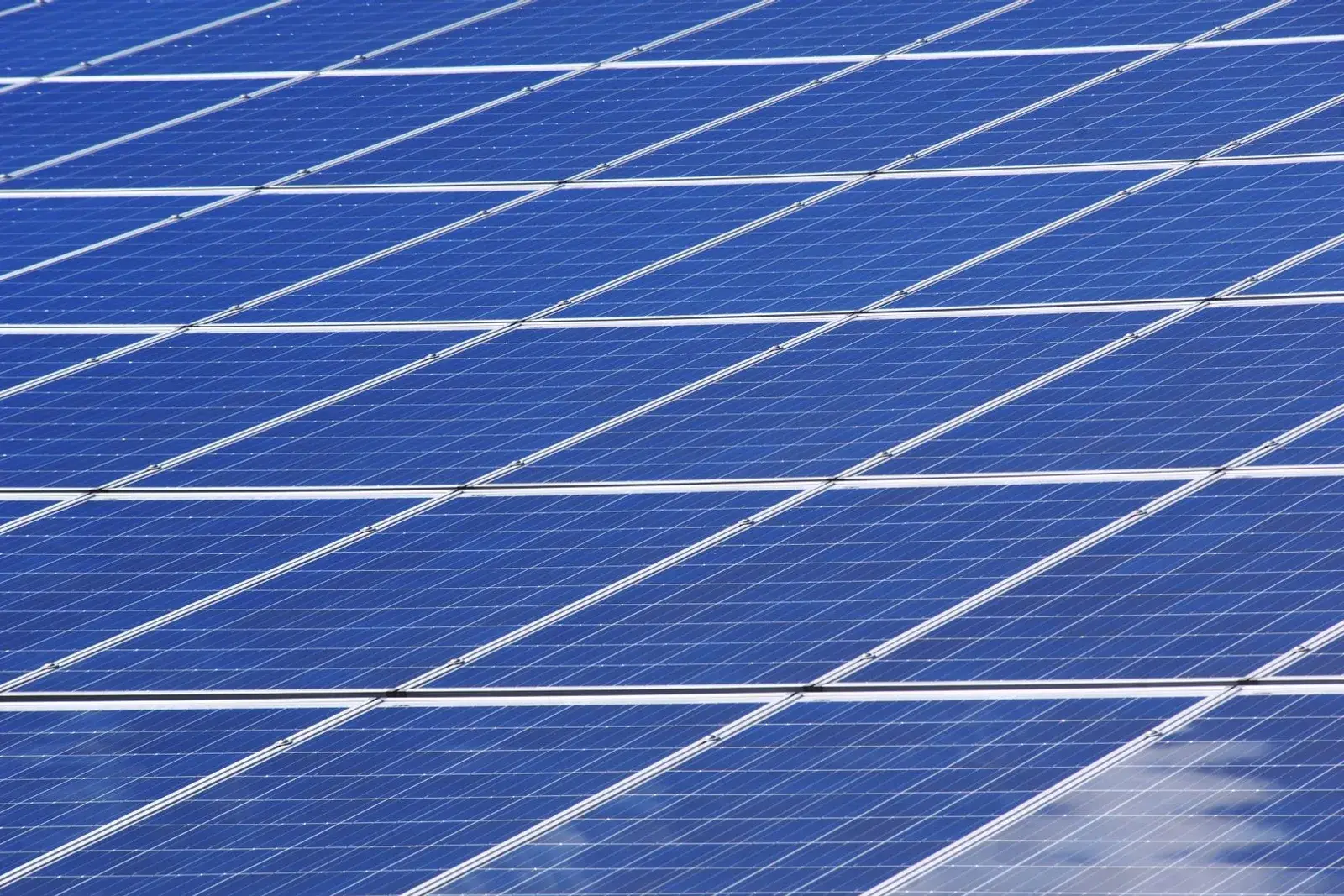
The short version
- What’s happening: Plug in solar is a small panel kit with its own inverter that connects through a standard wall socket. It trims the electricity you buy while the sun is out, but it doesn't run a whole home.
- Why now: British regulations allowing compliant kits came into force on 27 August 2026, and California's governor signed a plug-in solar bill on 30 September 2026.
- Should you care: It may suit renters and flats, with permission. The figures depend on daytime use, and the IET, an engineers' body, urges a wiring check first. This isn't legal or electrical advice.
Plug in solar is a small solar panel kit with its own inverter that connects to your home’s wiring through a wall socket. It sends power to whatever’s running at that moment, so you buy less from the grid. It won’t run a whole home, and the rules depend on where you live.
The rules below are dated as of November 2026 and they change, so confirm yours with your regulator, electricity network or utility. This is a general explainer, not legal or electrical advice.
What is plug in solar, and does it affect you?
A typical British kit has one or two panels of about 400W to 500W each, a micro-inverter, a lead, brackets and usually an app, Which? reported in October 2026. You’ll also see it called balcony solar. These questions show whether it’s worth reading on:
- Do you rent, lease or live in a managed block? You’ll need to ask for permission first.
- Is someone home using power in daylight? If not, expect less than the headline figures.
- Does your fuse box have old-style fuses, or is it unlabelled? Get an electrician’s view before spending money.
- Where do you live? As of November 2026, Northern Ireland and many US states have no equivalent rules.
How it spread
- May 2024Germany raises its plug-in solar power limit from 600W to 800W, according to the UK government's impact assessment.
- 16 Jul 2026Regulations are made and version 2 of the Plug-in Solar Device Interim Product Specification is published.
- 11 Aug 2026Ofgem approves a Distribution Code change covering how plug-in kits connect to local networks.
- 27 Aug 2026The British regulations come into force. The electricity safety part doesn't extend to Northern Ireland.
- 30 Sep 2026The California governor's office lists SB 868, on portable solar generation devices, as signed.
How can a solar panel feed power through a wall socket?
A panel makes direct current, while your home runs on alternating current. The micro-inverter converts one to the other and follows the voltage and frequency already on your wiring, so the panel’s output joins the mains supply.
Wires don’t care which way the power arrived. Your fridge draws on whichever supply is there, so solar output meets your home’s demand first, and any surplus flows out to the network.
A plug-in panel doesn’t power your home. It takes the edge off whatever’s already running.
A compliant kit isn’t backup in a power cut either. Britain’s specification requires the inverter to cut out when the mains voltage goes, to avoid feeding power back towards the network.
Why did it take until 2026 to reach Britain?
Two British rule books stood in the way. The plug standard, BS 1363, barred plugs from connecting generators to sockets. And electricity safety regulations pointed to standards, chiefly the BS 7671 wiring rules, that were written with fixed installations in mind.
Germany had taken a different path. A 2024 reform package raised its power limit and eased registration, and later that year tenants gained stronger rights to install kits.
Germany’s numbers vary because they count different things. The German Environment Agency, via the UK impact assessment, estimated just under 3 million devices in operation at the end of 2024, against about 0.8 million registered. Trade body analysis cited by GOV.UK counts 426,269 new registrations in 2025.
Britain’s fix came in 2026. Statutory Instrument 2026/848 created a route for approved plugs and tied plug-in kits to a government specification based on Germany’s technical standard.
Is plug in solar legal where I live?
It depends on your location, your device and your building. This table reports the position as of November 2026, and it isn’t a ruling on your home.
| Where | Position | Check with |
|---|---|---|
| England, Scotland, Wales | Regulations in force since 27 August 2026 cover devices that meet the specification | Your network operator, and your landlord or freeholder if you have one |
| Northern Ireland | The electricity safety change doesn’t extend there. The UK impact assessment says legal use would need its own regulations reformed, a matter for the Northern Ireland Executive | The relevant Northern Ireland department |
| US states with laws | EnergySage’s list, updated 30 October 2026, names California, Colorado, Connecticut, Maine, Maryland, New Hampshire, New Jersey, Utah, Vermont and Virginia | Your state utility regulator and your utility |
| Other US states | EnergySage calls this a regulatory grey area, where a utility may treat one panel like a rooftop array, with applications, fees and waits | Your utility |
Signing isn’t the same as starting: EnergySage gives dates from January to March 2027 for Virginia, Colorado, New Hampshire, California and New Jersey. It’s a solar marketplace rather than an official register, so confirm the dates with your state.
A general legal route also isn’t permission for your building. The government’s launch release lists landlord, freeholder and building owner consent, planning permission and listed building consent as things to check. US renters should read their lease and any homeowners’ association rules.
Why is plug in solar limited to 800W?
The clearest official explanation is alignment. Ofgem’s August 2026 decision says 800W matches the government’s plans and appears to be the top standard product size where these kits are legally sold, such as Germany.
In Britain, the limit is written into the regulations as maximum AC output, and the specification adds a 3.5A current cap.
The figure covers what reaches your wiring, not the panels. Britain’s specification allows up to 2,000W of panels behind the 800W limit, and says buyers above 960W should consider a professional assessment.
How much can plug in solar save?
The UK government’s illustrative estimate is £70 to £110 a year for an 800W kit, and neither end is a promise. The impact assessment shows how it reached them:
| Panel setup | Yearly output | Share used at home | Used at home | Estimated saving |
|---|---|---|---|---|
| 30° tilt, facing south | 690 kWh | 62% | 428 kWh | About £110 |
| Vertical, facing east or west | 378 kWh | 72% | 272 kWh | About £70 |
Those figures assume a home using 3,323 kWh a year, someone in between 9am and 5pm on weekdays, little or no shade, no battery and no export income. Power is priced at the Ofgem cap for July to September 2026, and the assessment warns the results won’t hold if prices change.
A panel hung flat against a railing makes far less power, and if nobody’s using power at home in the day, more of the output leaves the house, earning little or nothing. Which? adds that a kit covering only a fridge and router is unlikely to repay its cost.
The launch release also says “up to 20%” of an average home’s electricity use, without showing its working. On the table above, the south-facing kit’s full 690 kWh output is about 21% of that 3,323 kWh, while the power used at home comes to about 8% to 13%, by our arithmetic. The release doesn’t say which basis it used.
Which? puts kits at about £450 to more than £1,000. Dividing those prices by the savings gives about 4 years for the cheapest kit at the higher saving (£450 ÷ £110) and about 14 years for a £1,000 kit at the lower saving (£1,000 ÷ £70). Dearer kits would take longer. That’s our arithmetic, not a forecast: it assumes flat prices, no electrician’s bill and no export income, and a small kit may not reach those outputs.
US figures aren’t like for like. EnergySage estimates $150 to $600 a year on a $500 to $1,500 kit, assuming 70 to 110 kWh a month from 800W and about $0.18 per kWh, with more in high-rate states.
Is plug in solar safe, and why do the experts disagree?
The government and the Institution of Engineering and Technology (IET), a professional body for engineers, read the evidence differently, and we can’t settle that for your home. The launch release says independent testing shows compliant panels are safe and compatible with UK wiring. The government-commissioned study frames its finding around the conditions tested, and says product quality isn’t uniform across the market.
The IET called the revised plans a significant improvement but still not enough. It’s concerned about older wiring, rented homes and how much judgement is left to householders.
Safety simply cannot depend on the layperson.
Mark Coles, Head of Technical Regulations, IET statement, 30 July 2026
The IET wants a competent electrician to assess the installation before connection. The government’s July 2026 response said it didn’t consider mandatory professional inspection proportionate. A check that isn’t required may still be right for your home.
These British checks come from the specification and Ofgem’s decision, so read your kit’s instructions and the guidance linked from the launch release as well.
- Check the device. A product must be identified as compliant on the Energy Networks Association’s G98 Type Test Register. A UK plug alone doesn’t show that.
- Look at your fuse box. The specification points to modern residual current protection. Older fuses mean an electrician’s check and, where needed, an upgrade. If you’re unsure, ask an electrician.
- Use the right socket. No extension cables or adaptors, no damaged sockets, and nothing on lighting or fixed-equipment circuits.
- Keep to one device. The specification allows one per circuit, but the network rules allow one per household until they’re amended, and those take precedence.
- Check the wall. Timber balconies, timber, composite or laminate cladding and buildings under external wall remediation are ruled out. Fixings must be removable and leave the building’s fabric intact.
- Ask your insurer. The specification makes checking any effect on your cover, or your building’s cover, the user’s job.
- Notify your network operator. It’s mandatory, for fitting and for removing a kit. Your kit’s instructions should tell you how.
- Leave batteries out. Ofgem said plug-in storage devices stay prohibited in the UK.
In the US, UL Solutions launched a certification route, UL 3700, in January 2026. California’s committee said in June 2026 that, to its knowledge, no commercially available kit had full system certification. pv magazine USA reported in September 2026 that Intertek had certified one complete kit to UL 3700. That’s a trade press report and the position is moving, so ask for the listing and check your state’s requirement.
Who does plug in solar suit?
It fits people shut out of rooftop solar: renters and leaseholders with permission, and homes without a suitable roof, Which? says. It also suits homes with steady daytime use and a sunny, permitted mounting spot.
Homeowners with a good roof who plan to stay have a different sum. Which? puts a typical 4.6kW rooftop system at about £7,400 to install and about £650 a year in savings, averages it asks you to rework for your own home.
Sort out the permission, your daytime use and any question about your wiring before you look at the price.
Our take
Plug in solar makes more sense as a modest household appliance than as a small power station. Its value rests on an unglamorous match between when the sun shines and when your home is using power. The open argument over electrician checks is a good reason to get advice on your home's wiring, whichever side you find more persuasive.
Common questions
What is balcony solar?
It's another name for plug in solar: a small panel kit that connects through an ordinary socket. The panels don't have to sit on a balcony, though Britain's specification rules out timber balconies and some types of cladding.
Do I need an electrician for plug in solar?
As of November 2026, Britain's regulations don't require a professional check, but the IET says every home should have one before connection. The specification also says older fuse boxes must be checked and, where needed, upgraded by an electrician. Ask your network operator or an electrician about your own home.
Can I use an extension lead with plug in solar?
Not under Britain's specification. It says makers must tell buyers that extension cables, multi-way adaptors, RCD adaptors and travel adaptors aren't permitted. The kit connects with the plug supplied by its manufacturer.
Do I get paid for spare power?
Sometimes, but not much. Which? reported in October 2026 that some suppliers offer export tariffs, with earnings under £50 a year at best. The UK government's assessment says the Smart Export Guarantee needs an MCS-accredited installation, so check with your supplier.
Sources
- pv magazine USA: Plug-in solar roundup: Mango Power gets UL 3700, Bright Saver kicks off crowdfunding
- legislation.gov.uk: The Plugs and Sockets etc. (Safety) Regulations 1994 and Electricity Safety, Quality and Continuity Regulations 2002 (Amendment) Regulations 2026
- Department for Energy Security and Net Zero: Plug-in Solar Device Interim Product Specification
- GOV.UK: Plug-in solar: Regulatory amendment and interim product specification
- GOV.UK: Plug-in solar: consultation document (accessible webpage)
- Department for Energy Security and Net Zero: Plug-in solar: government response
- Department for Energy Security and Net Zero: Plug-in solar: impact assessment
- GOV.UK: Households can save as plug-in solar panels come to market
- GOV.UK: Government to make 'plug-in solar' available within months
- GOV.UK: Plug-in solar electrical safety study
- Ofgem: Ofgem decision to Approve DCRP/MP/26/02: Proposed Amendment to facilitate Plug-in Microgeneration
- IET: Updated statement: IET warns Government's plug-in solar plans still leave consumers exposed to electrical safety risks
- Which?: Should you buy plug-in solar panels?
- EnergySage: Plug-in & balcony solar panels: Are they worth it?
- Governor of California: Legislative update, 30 September 2026
- California Assembly Committee on Utilities and Energy: SB 868 analysis, hearing of June 10, 2026
- UL Solutions: UL Solutions Debuts Testing and Certification Framework for Safer Plug-In Solar Across the United States
Spotted a mistake? Tell us, or read our corrections policy.
Weekly briefing
The stories people are talking about and why, in one short email a week.
Related stories
The 2 August 2027 eclipse lasts up to 6 minutes 23 seconds. Why it runs so long, why 'longest of the century' is wrong, and what the UK and US will see.

Many clippers earn a set rate per 1,000 verified views, paid from a capped campaign budget. How the money moves, why brands pay and what nobody can tell you.

A shadowban means posts quietly reach fewer people. See what Instagram, TikTok, YouTube and X say about limiting reach, and which checks you can run yourself.